With the use of Photoshop I was able to photo merge all 4 photos to create a Panoramic image.
Final Image


 |
| AUSTRALIA SQUARE, SYDNEY DECEMBER 1969 ARCHITECT: HARRY SEIDLER SCULPTOR: ALEXANDER CALDER BUILDER: CIVIL AND CIVIC |

 |
Set in AV, F9 Stop, 1/60 s, ISO 100, White Balance, Taken Outside Post Production of lion photoshopped into landscape. |
 |
Set in AV, F9 Stop, 1/12 s, ISO 100, White Balance, Taken Outside Post Production of image demonstrating the Rule of Thirds.  Crop Test, original  By cropping it allowed me to have a more tighter composition  Cropped only top half of my subject |
 |
Lisa REIHANA Ngāpuhi: Ngāti Hine, Ngāi Tu New Zealander 1964– Hinepukohurangi2001 from Digital Marae 2001– cibachrome photograph mounted on aluminium 200.0 x 100.0 cm 
Double self portrait with daughter Doon, Diane Arbus, 1945.

Olive Cotton Australia 1911-2003
Skeleton Leaf1964 Gelatin silver photograph 24.7 × 19.6 cm |
 |
Set on AV mode, F5 Stop, 1/60 s, ISO 100, Taken outside Post Production (Fore, Mid, Background) |
 |
| Set on AV mode, F5 Stop, 1/60 s, ISO 100, Taken outside Original (Fore, Mid, background)  Set in AV mode, F9 Stop, 1/80 sec, ISO 200,Taken at the Otara Mall Post Production of Malita demonstrating the idea of Fore, Mid and Background  Set on AV Mode, F5 Stop, 1/40 s, ISO 800, Taken on Bridge Advantage Point 1 (unedited)  Set on AV mode, F5 Stop, 1/40 s, ISO 400, Taken on Bridge Post production of Advantage Point 2  Set on AV mode, F5 Stop, 1/40 s. ISO 400, Taken on Bridge Post Production of Advantage Point 3  Set on AV Mode, F5 Stop, 1/40 s, ISO 100, Taken on Bridge Post Production of Advantage Point 4 
Set in A, F5 Stop, 1/60 s, ISO 3060
Advantage Point, Self-Directed Time
 Set in A, F4 Stop, 1/60 s, ISO 200 Advantage Point, Self-Directed Time  Set in A, F4 Stop, 1/8 s, ISO 100 Advantage Point, Self-Directed Time  Set in A, F5 Stop, 1/200 s, ISO 100 Advantage Point, Self-Directed Time 
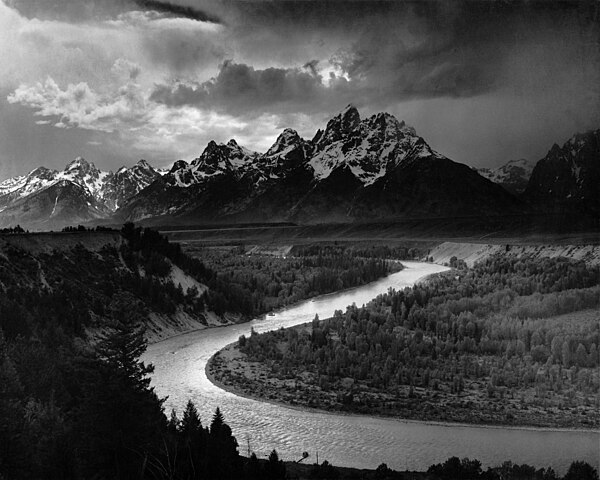
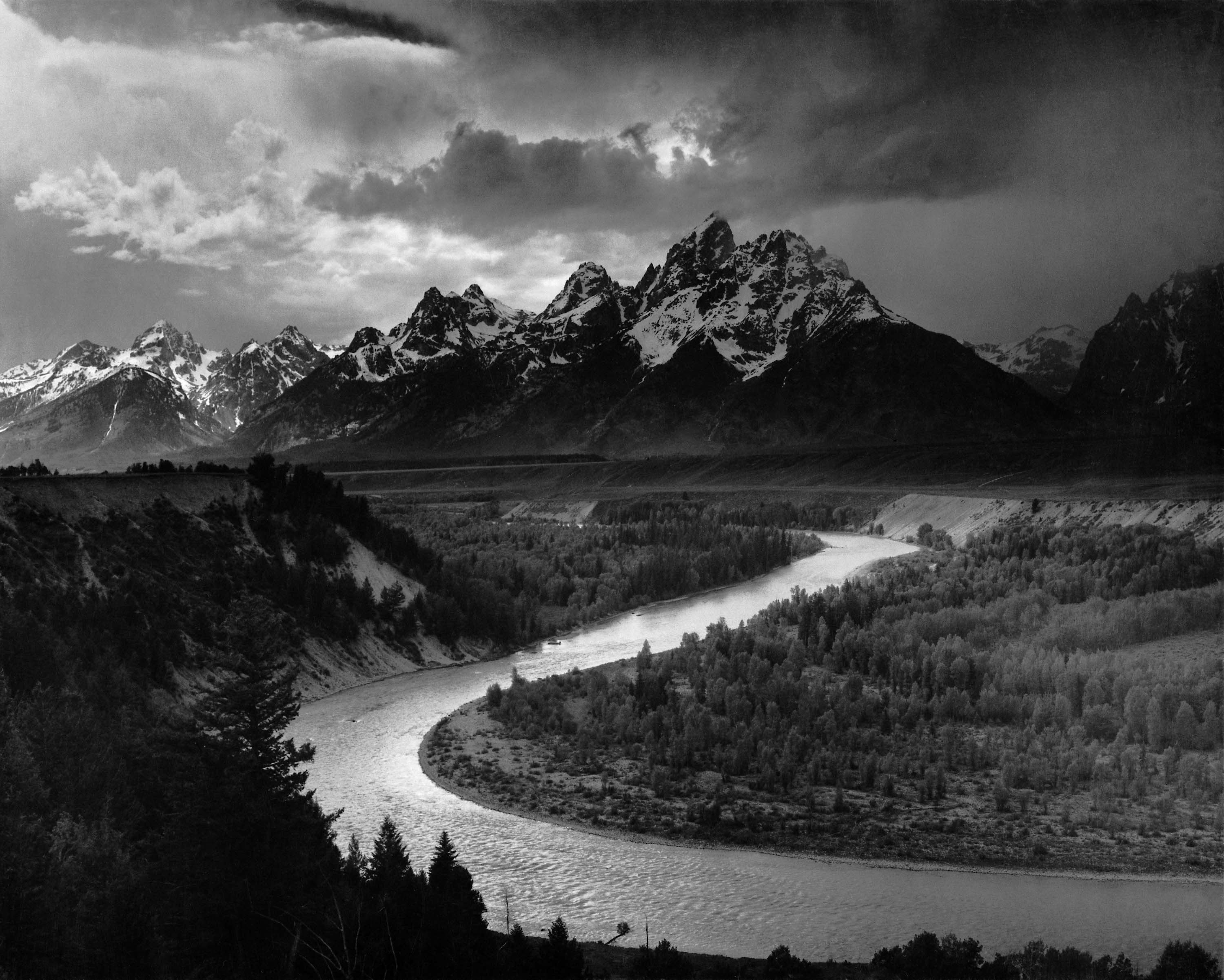
Ansel Adams, Adams The Tetons and the Snake River
Size of this preview: 749 × 600 pixels. Other resolutions: 300 × 240 pixels | 600 × 480 pixels | 959 × 768 pixels | 1,279 × 1,024 pixels | 3,000 × 2,402 pixels.
Original file (3,000 × 2,402 pixels, file size: 1.78 MB, MIME type: image/jpeg) |
 |
‘Shukhov tower’ photo by Alexander Rodchenko, 1929Photographic Element (Advantage Points) |
 |
| Set on AV, F5 Stop, 1/60 s, ISO 100, Taken outside. Post Production of butterfly photoshopped on to flower. |
  |
Set on AV, F5.6 Stop, 1/60 s, ISO 100, Taken outside Shallow Depth of Field |
 Set on AV, F6 Stop, 1/160 s, ISO 100, Taken Outside Shallow Depth of Field  Deep Depth Of Field, Self-Directed Time 
Set on A, F4 Stop, 1/40 s, IS0 100, Taken at park
Shallow Depth Of Field, Self- Directed time
|
 |
| Introducing Shutter Speed. The shutter is a curtain that opens to let light in to form an image on the film, and then closes again to keep light out. Fast shutter speeds (1/1000 second or faster) stop all but the fastest moving subjects while slow shutter speeds (1/8 second) moving subjects form a blur that seems to flow across the photo. A typical shutter speed dial shows speeds from: 1 Second 1/2, 1/4,1/8,1/15,1/30,1/60,1/125,1/250,1/500,1/1000,1/2000 second. 
Frozen and Blurred Motion
Class Tasks:  |
Set on TV, F4 Stop, 1/80 s, ISO 200, Taken Outside |
 | ||
Set on T.V, F4 Stop, ISO 200. Taken Outside
Set on S, F5 Stop, 1/60 s, ISO 1800 S
Self-Directed Time

Set on S, F5 Stop, 1/125 s, ISO 400 Taken at Rainbows End
Self- Directed Time
 Self-Directed Time  Set in S, F5 Stop, 2.5 s, ISO 100 Blurred Motion, Self-Directed Time  Robert Adams, Longmont, Colorado, 1979. Gelatin silver print; 5 x 5 in. TR2004’13197’13’2, 3/19/08, 11:00 AM, 16C, 6000×6716 (0+0), 100%, Custom, 1/80 s, R64.2, G37.2, B50.1
|